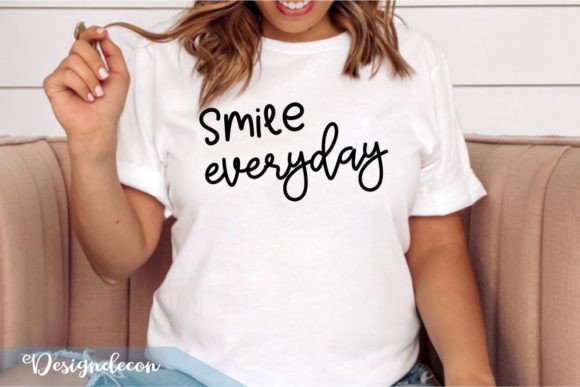
Smile Everyday Quote Lettering Svg: A Designer’s Review
As an embroidery designer who has spent years digitizing logos and testing files for client projects, I have learned that the difference between a hobbyist item and a professional product often comes down to the source file. When I first loaded the Smile Everyday Quote Lettering Svg into my design software, I was not just looking at pixels; I was visualizing thread paths, tension issues, and how the final stitched piece would feel in a customer’s hands. This review breaks down how this specific graphic performs when translated from a digital asset into a tangible, high-quality embroidered product.
First Impressions and Visual Personality
The immediate appeal of this design lies in its hand-lettered aesthetic. Unlike rigid, computer-generated fonts, the organic curves and varying stroke widths create a mood that is warm, approachable, and genuinely uplifting. For crafters and Etsy sellers, this visual personality is crucial. It signals "handmade" before the needle even touches the fabric. The layout is balanced, with enough negative space to prevent the design from feeling cluttered once stitched out. This is vital because embroidery adds physical texture and bulk; a design that looks clean on screen can become a muddy mess if the spacing is too tight.
In terms of theme, the message is universally positive. This makes it a versatile candidate for a wide range of commercial embroidery projects. Whether you are creating boutique branding for a wellness shop or personalized gifts for a baby shower, the sentiment fits naturally without feeling forced. As a graphics resource, it offers a solid foundation, but its true value is revealed only when we consider its application in real-world stitching scenarios.
Real-World Application: The Tote Bag Test
To truly evaluate the Smile Everyday Quote Lettering Svg, I imagined a common scenario for small business owners: preparing a custom embroidered tote bag. Canvas is a popular choice for eco-friendly shops, but it has a distinct weave that can interfere with fine details. I imported the SVG into my digitizing software to assess how the letterforms would hold up against this textured fabric.
The hand-lettered style works surprisingly well here. Because the strokes are not overly thin, they can accommodate a standard satin stitch or a tight fill stitch without losing definition. However, I noticed that some of the tighter corners in the lettering might require careful manipulation of the stitch density. If you are using this as a machine embroidery design, I recommend testing a sample on scrap canvas first. You want to ensure that the thread does not pull the fabric excessively, which can cause puckering around the text. Using a cut-away stabilizer is non-negotiable for this type of project to maintain the structural integrity of the finished product.
Versatility Across Product Lines
Beyond tote bags, this design shines in custom apparel. Imagine this quote stitched onto the chest of a heavyweight sweatshirt. The contrast between the soft, fuzzy texture of fleece and the smooth sheen of embroidery thread creates a premium look. For Etsy sellers, this is a high-margin item. The design is large enough to be readable but compact enough to fit comfortably on the left chest area, making it ideal for branded merchandise or staff uniforms.
It also translates well to smaller items like baby clothes or kitchen towels. For baby embroidery, however, caution is needed. The fabric is often thinner and more delicate. You must adjust your stitch density to avoid perforating the material. A running stitch outline followed by a light fill might be safer than a dense satin stitch for these fragile textiles. Similarly, for tea towels, the absorbent terry cloth requires a different approach. A backing stabilizer is essential, and you may need to increase the underlay stitches to anchor the design properly so it survives frequent washing.
Navigating Technical Challenges
While the Smile Everyday Quote Lettering Svg is robust, it is not without its challenges. Designers must be mindful of where they place this graphic. Curved surfaces, such as caps or hats, present a significant hurdle. The distortion caused by the curve can stretch the lettering, making it look uneven. If you plan to use this for cap embroidery, you must digitize it with compensation for the curvature, or choose a placement on the front panel that is as flat as possible.
Another critical consideration is fabric color. The download includes transparent PNGs and vector files, which makes it easy to preview the design on dark fabrics. However, embroidery thread behaves differently than ink. On dark garments, you cannot simply stitch white thread over black fabric and expect crisp edges. You will likely need a layer of white underlay or even an applique design technique where a patch of lighter fabric is placed underneath the lettering. This adds bulk but ensures readability and professionalism. Always test your thread colors against the fabric background. High contrast is key for legibility, especially with hand-lettered styles where the character shapes are already complex.
Enhancing Brand Value and Customer Trust
For creative entrepreneurs, the quality of your design assets directly impacts buyer engagement. A sloppy, poorly digitized embroidery file leads to broken threads, bird nests, and unhappy customers. By starting with a clean vector file like this SVG, you set yourself up for success. The ease of color change mentioned in the product description allows you to match brand colors precisely, ensuring consistency across your small shop product line.
When customers receive a personalized gift featuring this quote, they are buying into the emotion of the message as much as the craftsmanship. A well-executed stitch-out reinforces the perceived value of the item. It suggests attention to detail and care. This builds trust, which is the currency of any successful craft business. Whether you are selling digital embroidery files or finished handmade products, the clarity of the design contributes to a professional presentation that stands out in a crowded marketplace.
Practical Notes for the Embroidery Designer
Before you commit to a full production run, keep these practical tips in mind:
- Test on Scrap Fabric: Never skip this step. Different batches of fabric behave differently. Check for puckering, thread breaks, and registration issues.
- Check Stitch Density: Hand-lettered designs can have varying thicknesses. Ensure your digitizing software adjusts the density so that thick parts do not become too stiff and thin parts do not gap.
- Verify Licensing: While the product is marketed for crafts and T-shirt small businesses, always confirm the specific license terms for commercial use before selling finished items or redistributing the digital file.
- Mockup in Black and White: Remove color from your preview to check the structural integrity of the design. If it looks good in monochrome, it will look good in color.
- Stabilizer Selection: Match your stabilizer to your fabric. Cut-away for stretchy knits, tear-away for stable wovens, and wash-away for delicate or sheer materials.
In conclusion, the Smile Everyday Quote Lettering Svg is a strong contender for designers looking to add inspirational elements to their portfolio. It requires thoughtful digitizing and material selection, but the result is a polished, emotionally resonant product that appeals to a broad audience. For those willing to put in the technical work, it offers a reliable path to creating high-quality, sellable embroidery projects.